Master's Thesis Projects · IQCB Mainz
What Are We Working On?
Six research projects at the IQCB, explained in plain language.
The Institute for Quantitative and Computational Biosciences (IQCB) at Johannes Gutenberg University Mainz brings together biology, mathematics and computer science. This page presents six projects from one of its research groups, the laboratory of Peter Baumann. The group studies how cells look after the ends of their chromosomes, and it uses modern DNA sequencing to do so. All six projects are open questions that Master's students can work on. They are basic research: the aim is to understand how living cells work. Where a project has a link to medicine, we say so, and we also say how far away a practical use still is.
6Open research
questions
questions
A few words you will meet on this page
- DNA and genome
- DNA is the molecule that stores hereditary information. It is written with four chemical "letters": A, C, G and T. The complete DNA of an organism is called its genome. The human genome has about three billion letters.
- Chromosome
- One very long DNA thread, packed together with proteins. Most human cells contain 46 chromosomes.
- Telomere
- The end piece of a chromosome. It consists of one short DNA motif repeated many times and protects the chromosome end.
- Telomerase
- An enzyme, that is, a molecular machine made by the cell. Telomerase can make telomeres longer.
- Sequencing
- Reading the order of the letters in a piece of DNA.
- Yeast
- Single-celled fungi. Baker's yeast and fission yeast are popular laboratory organisms: they are simple, grow fast, and share many basic cell functions with humans.
The five dots in each "Connection to the IQCB" box show how much of a project is computing and data analysis. Five filled dots mean that almost all of the work is done at the computer.
01
Reading DNA More Accurately
Where Does a DNA-Reading Machine Make Mistakes?
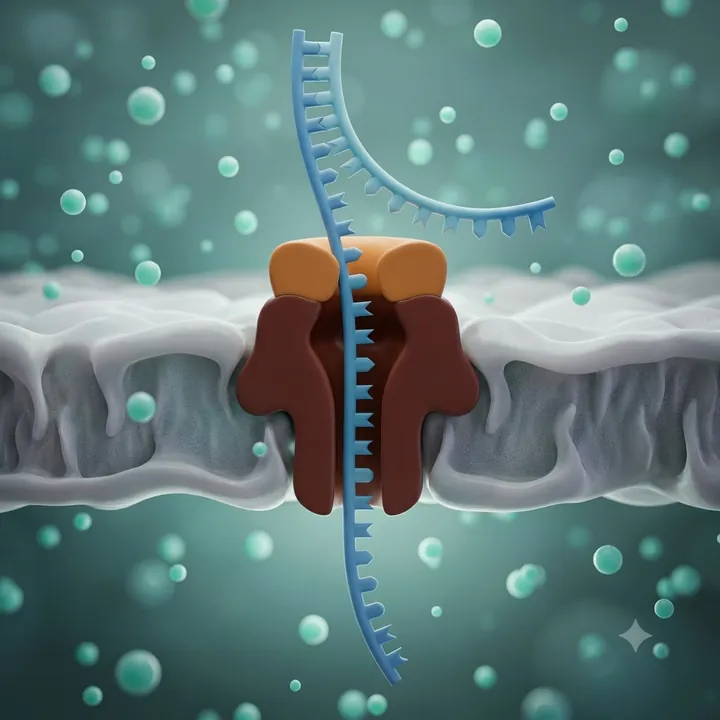
Reading DNA is routine in research today, and it is used more and more in medicine, for example to find the cause of a rare inherited disease. One of the newer methods is called nanopore sequencing. A DNA strand is pulled through a tiny opening, the nanopore. An electric current flows through the same opening, and each group of DNA letters disturbs this current in its own way. Software then translates the measured current back into letters.
The strength of this method is that it reads very long pieces of DNA in one go: tens of thousands of letters and more. Its weakness is that it makes somewhat more mistakes than older methods that read short pieces. These mistakes are not spread evenly. A well-known example is a row of identical letters such as AAAAAAA, where the machine often miscounts how many letters there are. Other problem spots are less well known.
This project draws up a detailed map of such problem spots. It uses two species of yeast. Their genomes are small, about 12 to 14 million letters, and their sequence is known very precisely. Each genome is read several hundred times. If nearly all readings agree at one position and a single reading differs, that reading is very likely a mistake. If the same mistake appears again and again in the same kind of sequence, it is not chance but a systematic weakness.
The students also ask where in the genome the problem spots lie. Are they inside genes, where a misread letter would matter most? And has the newest generation of pores and software removed the known weaknesses?
A smaller part of the work takes place in the laboratory, where the yeast DNA is prepared and sequenced. Most of it is done at the computer, where the students write their own analysis programs.
Connection to the IQCB
One sequencing run produces millions of readings. Patterns in such amounts of data can only be found with statistics and programming. The result of the project is a statistical model that predicts, for a given DNA sequence, how likely a reading mistake is. Turning large sets of measurements into models of this kind is what the IQCB was founded for.
Why this matters
Anyone who relies on a measurement needs to know its weak points. A reliable map of reading mistakes helps researchers decide whether an apparent change in the DNA is real or was produced by the machine. It also helps developers improve the software. The project works with yeast. It does not itself test or improve medical diagnostics.
02
The Neighbourhood of the Chromosome Ends
How Much Do the Regions Next to Our Chromosome Ends Differ Between People?
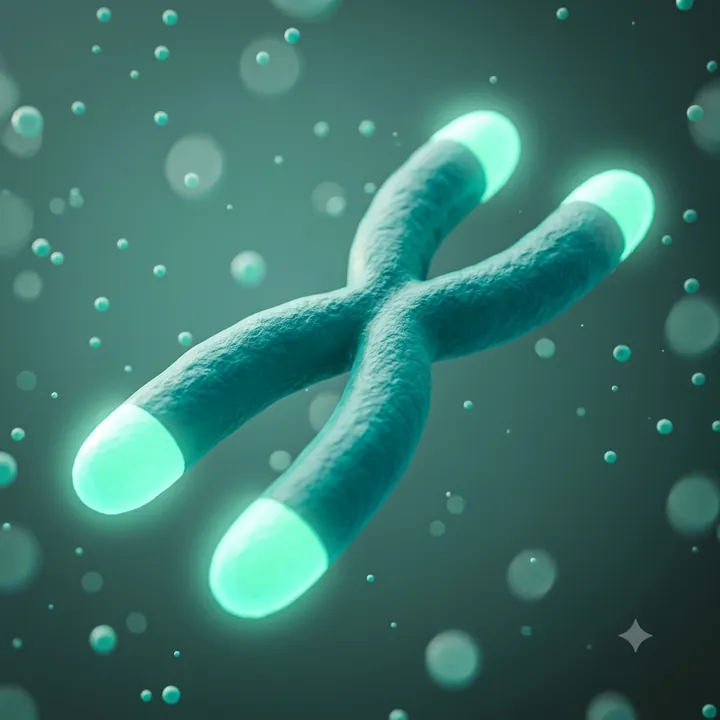
Most human cells contain 46 chromosomes. Each chromosome is one long DNA thread with two ends, the telomeres. Telomeres are often compared to the plastic tips of shoelaces, because they keep the end from fraying. A human telomere consists of the same six letters, TTAGGG, repeated hundreds to thousands of times.
Directly next to each telomere lies a region called the subtelomere. Subtelomeres are a patchwork. Some pieces occur at only one chromosome end. Others have been copied to many different ends in the course of evolution. Subtelomeres also differ from person to person, more than most other parts of the genome.
For a long time these regions could not be read properly. The standard methods read short snippets of DNA, and short snippets cannot be put in the right place when a region is full of repeats. Only in 2022 did an international research team publish the first human genome sequence without gaps, chromosome ends included. Methods that read long DNA molecules now make it possible to study subtelomeres in many people.
Why is this useful? Researchers increasingly want to measure the length of each telomere separately, instead of an average over all 92 chromosome ends of a cell. To find out which chromosome a telomere belongs to, they use the subtelomere next to it like a house number. If that house number looks different from person to person, telomeres are assigned to the wrong chromosome and the measurement becomes unreliable.
The project compares the subtelomeres of many unrelated people. It uses genome data from public databases and data measured in the research group. How large are the differences? Which chromosome ends vary most? How can the assignment be made reliable? Where data from parents and their children exist, the project also follows how subtelomere variants are passed on.
Connection to the IQCB
The project is done entirely at the computer. It compares long, repeat-rich DNA sequences from many people, sorts similar variants into groups and measures how diverse they are. This requires methods from statistics and computer science, and a lot of computing power.
Why this matters
Very short telomeres are a sign of a group of rare inherited diseases, and telomere length is being studied as a possible indicator of some age-related diseases. Measuring telomeres one chromosome at a time is still a research method and not a routine medical test. This project helps to make such measurements correct. That is a condition for any later use.
03
Shortening and Rebuilding
How Quickly Are Chromosome Ends Worn Down and Rebuilt?
Before a cell divides, it copies all of its DNA. The copying machinery has a blind spot: it cannot copy the very end of a DNA thread completely. With every cell division the telomeres therefore become a little shorter.
The enzyme telomerase can make up for this loss. It attaches new telomere repeats to the chromosome end. In humans, telomerase is active mainly in germ cells and in some stem cells. In most other body cells it is switched off or barely active. Yeast cells are different: they are single-celled organisms that keep dividing without limit, and their telomerase is always switched on.
Telomerase does not lengthen every telomere every time a cell divides. Each chromosome end is therefore in constant change. It loses a little with each division, and now and then it gains a new piece. How fast this exchange runs at each single chromosome end is unknown, because no instrument can measure it directly.
The project makes use of a peculiarity of yeast. Human telomerase writes exactly the same motif again and again. Yeast telomerase is less tidy, and the repeats it adds vary slightly. Every freshly added piece therefore has its own letter sequence. The older part of a telomere, close to the rest of the chromosome, is the same in all descendants of a cell. The outer, recently added part differs from cell to cell. Comparing many single telomeres from the same chromosome end shows how much of it has been replaced recently.
The students write computer programs that extract this information from millions of sequenced DNA molecules, for baker's yeast and for fission yeast. They then compare normal yeast with altered yeast strains whose telomeres are unusually long or short. This shows what controls the rebuilding.
Connection to the IQCB
No device reports how fast a telomere is rebuilt. The students first have to define this quantity mathematically. Then they estimate it for each DNA molecule and combine many such estimates, with sound statistics, into one value per chromosome end. Designing a new kind of measurement from raw data is typical of quantitative biology.
Why this matters
The upkeep of telomeres matters for human health. When it fails, rare inherited diseases can result that affect the bone marrow and the lungs, among other organs. Most cancers, in contrast, switch telomerase back on so that their cells can keep dividing. This project studies the basic rules in yeast. It does not lead directly to a therapy, but medical research builds on such rules.
04
Assembling a Molecular Machine
How Does the Cell Build Telomerase, and What Goes Wrong in a Rare Disease?
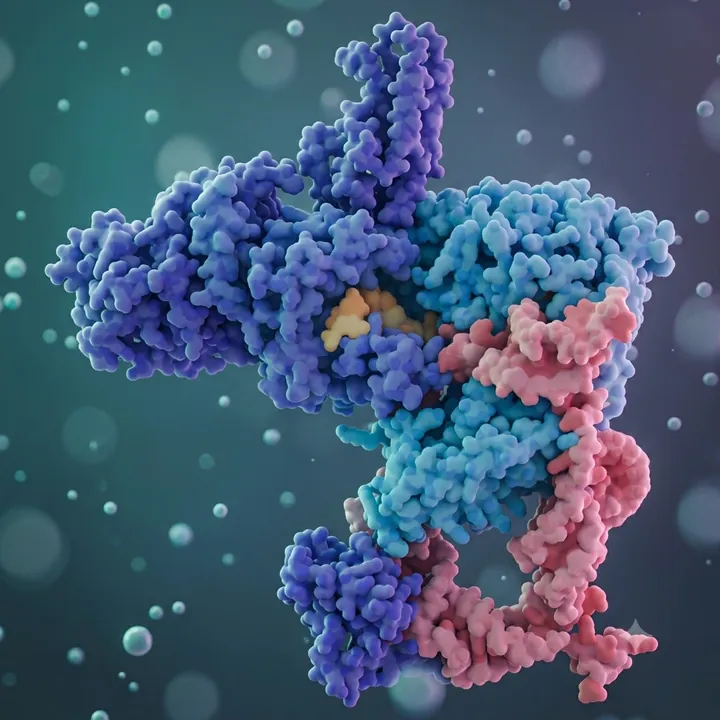
Telomerase, the enzyme that lengthens chromosome ends, is made of two kinds of building blocks: proteins and a piece of RNA. RNA is a close chemical relative of DNA. In telomerase, the RNA contains the template that the enzyme copies onto the chromosome end again and again.
The telomerase RNA is not ready for use when the cell first makes it. It starts as a longer precursor. This precursor has to be trimmed to the right length, folded into the right shape and joined with its protein partners. Several helper proteins accompany it step by step, much like a workpiece that passes along a production line with quality checks.
The project studies one family of such helpers, the LARP proteins. Earlier work, in which the Baumann group took part, showed how they act in human cells. One of them, LARP7, works with a partner protein to help the telomerase RNA mature. Another one, LARP3, acts as a brake. A related protein does a similar job in fission yeast. Yeast is therefore a simpler system in which ideas can be tested quickly.
People who inherit two defective copies of the LARP7 gene have Alazami syndrome. This is a very rare developmental disorder with restricted growth and intellectual disability. The blood cells of these patients also have very short telomeres. LARP7 has a second important task in the cell: it helps to control how genes are read. It is therefore not yet clear how much the telomerase problem contributes to the symptoms. This is one of the questions behind the project.
The students produce the helper proteins and the RNA in pure form and measure how firmly they bind to each other. They then change the proteins in the way they are changed in patients. In human cells grown in the laboratory, they examine which step of the production line fails and whether the telomeres become shorter.
Connection to the IQCB
Most of this project takes place at the laboratory bench. Numbers still play a central role. The strength of binding is worked out by fitting mathematical curves to the measurements. Large data sets that show which proteins work together can only be evaluated with software. In this project, computing supports the experiment.
Why this matters
Faulty assembly of telomerase contributes to rare inherited diseases. Knowing exactly which step fails helps doctors and researchers to interpret the genetic findings of patients, and it shows where a future treatment could start. Such a treatment does not exist yet, and this project does not develop one.
05
Protecting Chromosome Ends
Why Are Chromosome Ends Not Mistaken for Broken DNA?
DNA can break. Cells have repair systems that find loose DNA ends and join them together again. This is vital, but it creates a problem. Every chromosome has two natural ends, and they look much like a break.
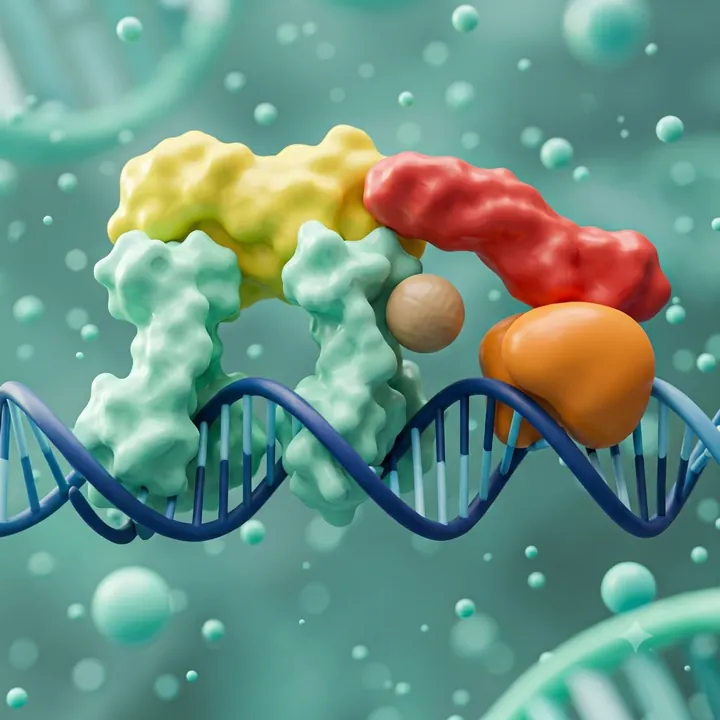
Cells solve this problem with a group of proteins called shelterin. These proteins sit on the telomeres and keep the repair systems away. In effect they label the chromosome end: "natural end, do not repair".
If this protection fails, the repair system joins two chromosome ends to each other. The fused chromosome is torn apart at the next cell division. The new broken ends fuse again, and the cycle repeats. In this way large parts of the genome can be rearranged. Rearrangements of this kind are found in many tumours and are thought to contribute to the development of cancer.
In 2022 the Baumann group reported an unexpected finding in fission yeast. When one shelterin protein, called Rap1, is altered in particular ways, telomeres of normal length stay protected, but unusually long telomeres fuse. Longer is therefore not simply better. This may help to explain why each species keeps its telomeres below a certain length.
The project investigates why long telomeres are harder to protect. Fission yeast is used because its protective proteins closely resemble the human ones and experiments are quick. The students change single building blocks of Rap1 and make telomeres longer on purpose. They count the fusions and read the DNA at the points of fusion to see which repair system was responsible. Under the microscope they also test one possible explanation: that long telomeres are only safe when they are anchored to the envelope of the cell nucleus.
Connection to the IQCB
Much of the work is done in the laboratory: building yeast strains, microscopy, and separating DNA by size. The decisive results are numbers. How often do fusions occur? Does their frequency depend on the length of the telomere? What do thousands of sequenced fusion points have in common? Answering these questions takes statistics and sequence analysis.
Why this matters
Fusions between chromosome ends are one source of the genome damage seen in cancer cells. In humans, very short telomeres are linked to disease, and people who inherit unusually long telomeres have a higher risk of certain cancers. The project clarifies a basic mechanism in yeast. Whether the same holds in human cells has to be tested separately.
06
Reproduction Without Males
How Do All-Female Lizard Species Reproduce, and What Happens to Their DNA?
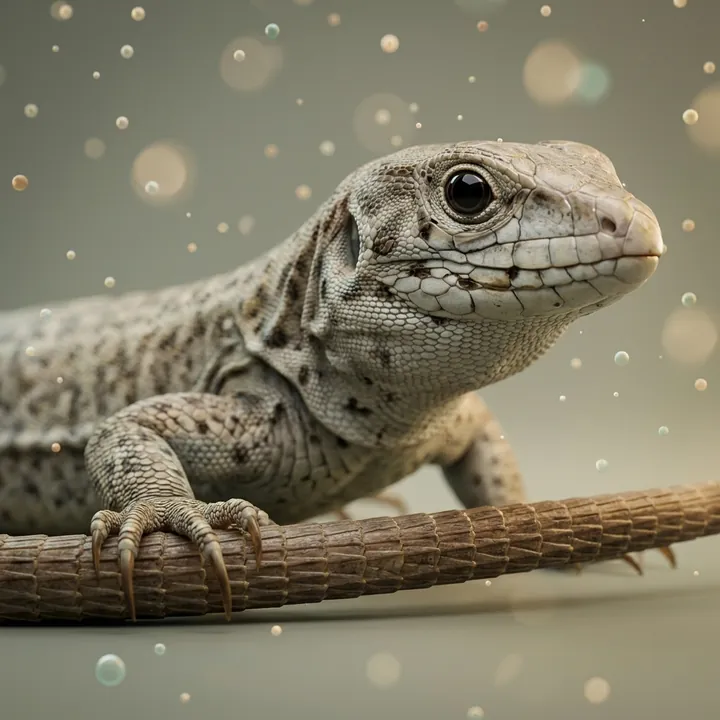
Nearly all vertebrates, that is, animals with a backbone, need a mother and a father to produce offspring. Whiptail lizards from North America are among the rare exceptions. Several whiptail species consist of females only. They lay eggs that develop without being fertilised. Biologists call this parthenogenesis, from the Greek for "virgin birth".
These all-female species arose when two different whiptail species mated. Their hybrid offspring carry one set of chromosomes from each parent species, and they can reproduce on their own. Some species arose from a further cross and carry three sets.
How does an egg get a full set of chromosomes without sperm? Normally an egg cell contains only half of the mother's DNA, and the other half comes from the father. In 2010 the Baumann group showed that the all-female whiptails double their chromosomes before the egg cell is formed. The halving that follows then leaves a complete set. The daughters are genetic copies of their mother, and the two different chromosome sets are kept.
There is a second way. Females of species that normally reproduce sexually occasionally have offspring without a father. In 2024 the group showed how this happens in whiptails. The egg first halves its DNA as usual and afterwards duplicates it. The offspring then have two identical copies of every chromosome. Harmful gene variants, which are normally balanced by a healthy second copy, now take full effect. This explains why many such offspring have malformations or die early. The study also showed that this happens even when males are present.
This project looks at the long-term consequences. With the complete genome sequences of several whiptail species, the students investigate how the genome of an all-female line changes over many generations. Do the two chromosome sets stay separate? Or do they exchange pieces and gradually lose their differences? The students also develop a computer method that tells from DNA data whether an animal was produced with or without a father.
Connection to the IQCB
The project consists entirely of data analysis. The complete genomes of many animals are compared at the computer. The aim is to find the places where the two chromosome sets have become identical, and to work out which piece of a chromosome came from which ancestral species.
Why this matters
Offspring without a father have also been documented in other vertebrates kept in zoos and aquariums, among them sharks, snakes, Komodo dragons and California condors. A reliable DNA test for such cases helps breeding programmes for endangered species, because these offspring carry little genetic diversity. Beyond that, the lizards help with an old question in biology: what is sexual reproduction good for, and what happens to a genome without it?